miércoles, 30 de septiembre de 2009

doré:::octubre

OCTUBRE 2009
Richard Brooks (I)
Recuerdo de Michelangelo Antonioni (y IV)
Os filmes da minha vida - Recuerdo de João Bénard da Costa (I)
Premios Goya (III)
Buzón de sugerencias
Bicentenario de Edgar A. Poe (II)
Sombras recobradas
Simon Lund
Muestra de cortometrajes de la PNR

No me perdería:

jueves 1:::21.45 :::Michelangelo Antonioni:::Sala 1:::L'avventura (La aventura, Michelangelo Antonioni, 1960):::Int.: Monica Vitti, Gabriele Ferzetti, Lea Massari:::Italia /Francia. VOSI/E*. 138'

"Lenta, taciturna y de una elegancia gélida, la película no trata tanto de cómo y por qué una joven desaparece de un grupo de ricos aburridos de vacaciones, como de la naturaleza desganada de la historia de amor en la que se embarcan su amante y su mejor amiga mientras la buscan distraidamente" (Geoff Andrew).

domingo 4:::19.30:::Michelangelo Antonioni:::Sala 1:::Zabriskie Point (Zabriskie Point, Michelangelo Antonioni, 1970):::Int.: Mark Frechette, Daria Halprin, Rod Taylor. VOSE*. 112'

"Zabriskie Point es la obra de alguien tan conmovido por el espacio, el silencio y la luz del desierto que para él la neurosis y el ego de las ciudades son una moda o una aberración... Casi cincuenta años después de que MGM redujera a la mínima expresión Avaricia, llega Antonioni y hace una película tan alejada de la identificación o el relato, tan anticomercial, tan obstinada y autodestructivamente bella, que casi arruina a la MGM" (David Thomson). Segunda proyección día 15.

martes 6:::22.00:::Richard Brooks:::Sala 1:::Key Largo (Cayo Largo, John Huston, 1948):::Guión: Richard Brooks:::Int.: Humphrey Bogart, Edward G. Robinson, Lauren Bacall. EE UU. VOSE. 100'

Frank McCloud viaja a un pequeño hotel en Cayo Largo gestionado por James Temple, un inválido en silla de ruedas, y su nuera Nora, viuda de un amigo que falleció durante la Segunda Guerra Mundial. Nora y James le brindan una acogida calurosa, pero el gángster fugitivo Johnny Rocco y su banda se apoderan del hotel. Segunda proyección día 6.

martes 13:::20.00:::Buzón de sugerencias:::Sala 2:::Detour (Edgar G. Ulmer, 1946):::Int.: Tom Neal, Ann Savage, James Russo. EE UU. VOSE*.68’

"Detour tiene una de las tramas más enrevesadas del cine negro, que incluye una estructura en flashback, una extensa voz en off, un viaje por todo el país, varios asesinatos y cambios de identidad, una inolvidable mujer fatal y uno de los antihéroes más desdichados y masoquistas nunca conocidos, todo ello en poco más de una hora" (Gary Morris). Segunda proyección día 23.

sábado 17:::19.30:::Clausura de Sombras recobradas:::Sala 1:::Häxan (La brujería a través de los tiempos, Benjamin Christensen, 1922):::Int.: Ella La Cour, Elisabeth Christensen, Benjamin Christensen. Dinamarca. MRScSE*. 106' a 20 f/s:::Copia restaurada en 2007 por el Svenska Filminstitutet:::Con la presencia de Jon Wengström:::Acompañamiento de piano: Mariano Marín.

"Benjamin Christensen aparentemente pretendía que su película fuera un estudio serio de la brujería, pero en realidad consigue una obra de sadismo pornográfico. El impacto de la película se ha acrecentado con los años: las escenas de desnudo y las referencias escatológicas, lejos de parecer pacatas, han adquirido una cualidad siniestra, parecen los restos de una imaginación morbosa y arcaica" (Dave Kehr). Segunda proyección día 21.

jueves 22:::20.10:::Os filmes da minha vida:::Sala 1 Johnny Guitar (Johnny Guitar, Nicholas Ray, 1953). Int.: Joan Crawford, Sterling Hayden, Mercedes McCambridge. EE UU. VOSE. 110'

"Como las cosas muy grandes, Johnny Guitar no se explica. Se cuenta, se ve, una y otra vez, como las historias que se cuentan a los niños hasta que se las sepan de memoria y sepan que son ciertas. Es la Imitatio Christi de los cinéfilos. Se abre al azar y se encuentra la frase justa. Se ve por sexagésima vez y se encuentra la respuesta precisa para lo que se está viviendo" (J. B. da Costa). Segunda proyección día 25.

sábado 24:::17.30:::Os filmes da minha vida:::Sala 1 La Règle du jeu (La regla del juego, Jean Renoir, 1939):::Int.: Nora Grégor, Marcel Dalio, Jean Renoir. Francia. VOSE. 110’

"Bajo la apariencia 'inocente' y sobre una aparente 'desenvoltura' la obra cuestiona una estructura de sociedad y una concepción del amor. Meterse con una o con la otra nunca molestó demasiado. Atacar paralelamente las dos es otra cosa. (...) Renoir invierte y subvierte muchas reglas de muchos juegos. Y hace una película genialmente subversiva" (J.B. da Costa). Segunda proyección día 28.

miércoles 28:::17.30:::Os filmes da minha vida:::Sala 1 Senso (Senso, Luchino Visconti, 1954):::Int.: Alida Valli, Farley Granger, Rina Morelli. Italia. VOSE. 118'

"Una de las más curiosas paradojas de la historia de la relación cine ópera es que la descendencia de Senso no es cinematográfica sino operática (...) Son las escenografías con las que Visconti revolucionó la puesta en escena de la ópera de este siglo. En Senso, la voz y la imagen de Alida Valli prepara el camino a la voz y la imagen de Maria Callas" (J. B. da Costa). Segunda proyección en noviembre.

viernes 30:::17.30:::Os filmes da minha vida:::Sala 1:::Ordet (La palabra, Carl Th. Dreyer, 1954):::Int.: Henrik Malberg, Emil Haas Christensen,Birgitte Federspiel. Dinamarca. VOSE. 131'

"En la más clásica de las planificaciones se hace evidente para nosotros la promesa de Cristo. 'Si un día, con fe, dijerais a aquella montaña que se moviera, se movería'. La única vez que he visto que eso ocurriera es en esta película. Me diréis que es cine, pero no, no lo es. (..) Sólo la Palabra y la Imagen pueden suspender así. Y por eso dice San Pablo que, más grande que la fe, es el amor. Ordet, de Dreyer, es la película de ese amor" (J. B. da Costa). Segunda proyección en noviembre.

todos:::programados:::

sábado, 26 de septiembre de 2009

Tone Matrix

Simple sinewave synthesizer triggered by an ordinary 16step sequencer. Each triggered step causes a force on the underlaying wave-map, which makes it more cute.

Based on the AudioTool engine thus no sources, I am sorry.

Press SPACE key to clear. Right-Click for Copy&Paste


JUEGA

más info en el blog . Para descubrir más cosas entra en el Laboratory de André Michellle

martes, 22 de septiembre de 2009

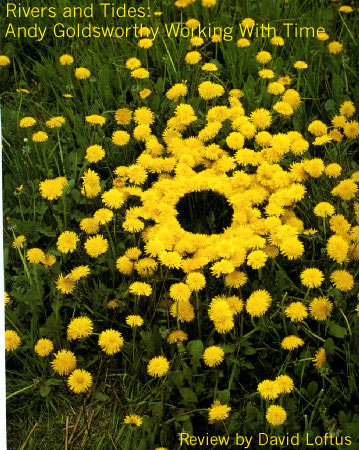
"rivers and tides"; andy goldsworthy

Try to picture an art piece that cannot be put in a museum, purchased by wealthy collectors, or displayed in a corporate foyer or boardroom – because it disintegrates in less than a day, perhaps even within 20 seconds. Try to imagine executing artwork through the medium of iron oxide chalk, raw sheep’s wool, flower blossoms, leaves and grass, feathers, random sticks and stones, broken rocks, pieces of icicle, green iris blades and red berries, thorns, bracken, or handfuls of snow. Try to fathom the notion that an artist could a take stroll in the woods, along a riverbank, down a beach, and with no tools at all – no paint brushes, no sculptor’s chisels or knives, no canvases or pedestals or quarried granite or polished wood – manage to create unutterably beautiful art from the objects and materials he finds by chance.

Often it seems that contemporary art has become a largely academic exercise, with artists frantically carving out tiny niches of discrete subject matter or distinctive media in which to say something, show something faintly “original.” But for more than two decades, Scottish sculptor Andy Goldsworthy has quietly been blowing that notion to smithereens. He’s the visual art world’s equivalent of Italo Calvino, who celebrated the wide-open choices available to him as a writer of short stories and novels while others lamented the death of the novel. Goldsworthy calmly demonstrates over and over that the forms, styles, and media available to the artist are approximately infinite.

In the documentary by German filmmaker Thomas Riedelsheimer, we watch Goldsworthy build man-sized standing “eggs” of stacked slate on a beach between tides; place a 50-foot spiral “worm” of leaves sewn together with grass in a pond, whence it begins to wend its way down a mountain stream; gnaw at icicle shards in order to piece them into a looping snake that seems to pass repeatedly through a stone promontory like a fat crystal thread; construct an “igloo” of driftwood that is carried away by the incoming tide in a stately galactic whirl.


Try to picture an art piece that cannot be put in a museum, purchased by wealthy collectors, or displayed in a corporate foyer or boardroom – because it disintegrates in less than a day, perhaps even within 20 seconds. Try to imagine executing artwork through the medium of iron oxide chalk, raw sheep’s wool, flower blossoms, leaves and grass, feathers, random sticks and stones, broken rocks, pieces of icicle, green iris blades and red berries, thorns, bracken, or handfuls of snow. Try to fathom the notion that an artist could a take stroll in the woods, along a riverbank, down a beach, and with no tools at all – no paint brushes, no sculptor’s chisels or knives, no canvases or pedestals or quarried granite or polished wood – manage to create unutterably beautiful art from the objects and materials he finds by chance.(...) sigue aquí


lunes, 21 de septiembre de 2009

Magdalena Jetelová

Magdalena Jetelová es una de las artistas checas más conocidas internacionalmente. Su incursión en el mundo del arte tuvo lugar ya en los años 60 cuando presentó sus primeras esculturas, con el correr del tiempo su obra ha evolucionado enormemente hasta situarla en el pedestal de los artistas que escriben su nombre con letras mayúsculas.La obra de Magdalena Jetelová se encuentra marcada por una especie de "magnetismo" que se desarrolla en el contexto de su periódo "pacifista" comprendido como una reacción al régimen comunista de la hoy extinta Checoslovaquia. Su obra de entonces, gigantescas sillas y mesas, fue como una luz intermitente en medio de las tinieblas que cubrían la sociedad checa durante el totalitarismo.

En los años 80 todavía se percibe la lucha de Jetelová contra el sistema imperante. Su obra "Escaleras", representó la desesperación de la sociedad checa de entonces: Las escaleras suspendidas en el espacio no conducían a ninguna parte. Según explicara la artista, esa situación la puso entre la espada y la pared lo que la obligó a abandonar su país natal en 1985 e instalarse en Alemania. El gran escape del régimen comunista la convirtió en un tipo de "leyenda" para ciertos círculos artísticos checos.

Magdalena Jetelová supo aprovechar su nuevo "hábitat" cultural que poco a poco fue influyendo su obra. Si hasta el momento en su trabajo destacaban utensilios de la vida cotidiana trabajados en madera ordinaria pero de dimensiones gigantescas, empezó el camino hacia el empleo de enormes espacios naturales, ya fuese en ciudades o en el campo.

Su obras fueron expuestas en los museos más importantes de Alemania, Austria y EE.UU. Uno de sus críticos llegó a decir que las enormes obras tridimensionales de Magdalena Jetelová "quedaban pequeñas" en los museos.


Resulta que las salas y los patios de los museos no ofrecen muchas veces las condiciones necesarias para apreciar obras superdimensionadas. Otras obras se encuentran directamente en las ciudades o naves de antiguas fábricas lo que permiten apreciar en su totalidad el mensaje de la artista checa Magdalena Jetelová.

La Galería de la Ciudad de Praga muestra actualmente en sus principales salas algunas de las obras de Magdalena Jetelová de mediados de los años 90, en la exposición "Urban Landscape" sobresalen elementos del tiempo y el espacio en un contexto urbano y geográfico.

En fotografías de gran formato los visitantes pueden apreciar, por ejemplo, "Atlantic Wall, 1994-1995". La línea de bunkers del Ejército alemán durante la Segunda Guerra Mundial se extendía desde la costa europea en Noruega hasta España. Fueron construidos entre 1942 y 1944 con el objetivo de impedir una invasión de las fuerzas aliadas. Los monolitos de hormigón armado no soportaron el paso de los años ni las inclemencias del tiempo. Hoy después de más de 50 años los restos de los bunkers nos recuerdan enormes rocas carcomidas por el mar.

Sobre la superficie de los bunkers Magdalena Jetelová proyectó textos luminosos tomados de la obra de filósofos franceses que se refieren a espacios militares y a la filosofía de la violencia en las operaciones militares.

De acuerdo con la crítica, se trató de una obra muy impactante contra la guerra y la violencia. Los textos sobre la superficie irregular de los bunker "desaparecieron" con las sombras de la noche y con lo sombría historia de las guerras protagonizadas a lo largo de la historia de la Humanidad.

Para detallar un poco más la obra de Magdalena Jetelová cabe mencionar el empleo de rayos luminosos. Por ejemplo en lo que se conoció como proyecto Islandia 1992, partió imaginariamente el país en dos, con una línea de rayos láser que simbolizaba la frontera entre América y Europa. Fue una línea divisoria cargada de elementos históricos, culturales y por supuesto geográficos.

Muy interesante ha resultado también la muestra "La Habana 1994-1995". Los visitantes de la exposición de Praga pueden apreciar el punto de contacto o bien de separación entre el mundo que representaba la colonia española, con sus majestuosos palacios de los "señores explotadores", contrastando con la revolución castrista, con la utopía de la sociedad sin clases y del nuevo orden en el llamado Tercer Mundo. De acuerdo con Jetelová ambas culturas se desmoronan y en sus ruinas se encuentran más unidas que nunca.

Los "esqueletos" de las bellas casas coloniales de La Habana son testimonio de una época de oro, pero lo impresionante es que a esos edificios no les dejan morir en paz, para sorpresa de muchos, la ropa tendida en los restos de balcones da a entender que ahí, en esos escombros, viven seres humanos. Se trata de una mezcla de antigua belleza con el horror de nuestros días. La obra se encuentra enriquecida con música latinoamericana.


búscala aquí

viernes, 11 de septiembre de 2009

casa serra_barueri

esta imagen me ha inspirado... a buscar proyectos con pasarelas

martes, 8 de septiembre de 2009

Balance Concept: Uster y Fällanden – Haerle Hubacher und Hofmann

Estos dos ejemplos, construidos en Suiza en las localidades de Uster, en los años 2000-2001 y en Fällanden en 2002-2003, ensayan diversas posibilidades de terminación de los balcones perimetrales y por tanto, de las fachadas. La planta de los edificios es prácticamente la misma, con ligeras variaciones del núcleo de servicios en el proyecto de Fällanden.

Memoria

A pesar de toda planificación urbana y de las objeciones ecológicas, la casa familiar suburbana sigue siendo el sueño de muchas familias. El concepto de desarrollo de vivienda “Balance”, que ya se construido en tres localidades, se esfuerza por crear alternativas sostenibles y atractivas.

En Uster, a sólo once minutos de Zurich en tren de cercanías, treinta y cuatro “casas” eficientes en recursos se concentran en siete bloques puntuales de varios pisos.
Los pisos individuales – se venden como cáscaras estructurales nobles que comprenden alrededor de 190 m² interiores y más de 100 m² de espacio exterior – se unen las cualidades de una vivienda unifamiliar, incluyendo una galería perimetral, con ventajas como la minimización de costes y la flexibilidad tipológica.
La distribución se reduce a dos puntos de acceso desde la escalera exterior, un núcleo de instalaciones, y una capa independiente de armarios que contiene el sistema de ventilación para el sistema “Minergie” de colectores de calor geotérmicos e intercambiadores de calor, el cual, sin embargo, requieren suplementarse con calefacción eléctrica.
Con un mínimo esfuerzo, se pueden hacer variantes a la vivienda, desde un loft hasta casas de 8 habitaciones. Esto produce diversidad social – familias jóvenes junto a las personas mayores, que pueden subarrendar, o una oficina en la azotea.

Uster

Terreno: 11.562 m²
Total de unidades: 35
Superficie útil por piso: 190 m²
Área de balcones por planta: 70 m²
Coeficiente de uso de suelo: 0,61

ter

Terreno: 11.562 m²
Total de unidades: 35
Superficie útil por piso: 190 m²
Área de balcones por planta: 70

Fällanden

Terreno: 12.657 m²
Total de unidades: 52
Superficie útil por piso: 190 m²
Área de balcones por planta: 70 m²
Coeficiente de uso de suelo: 0,72

Coeficiente de Constructibilidad: 2.75


más información: aquí

lunes, 7 de septiembre de 2009

how to write and use an artist statement

Your artist's statement can be a moving testament to your creativity and integrity. The expression of this commitment will vary, but the effectiveness of your artist's statement stems from the authority with which you write it.

Our words "author" and "authority" come from the Latin root "augere," which means "to increase, to create, to promote." This implies that the notions of creation and promotion are compatible! The more I muse on the meaning of working from my authority, of being the author of my work and of my conduct, the more I understand that authentic communication about my work is a powerful tool for creative growth as well as for business success.

The exercises in this section will get you centered and in touch with your own authority. When I write promotional materials for artists (or any kind of business) I always have the principal people involved do these exercises first. I use the words and phrases they generate to compose compelling artist's statements on their behalf. This way their creative authority is incorporated in the finished product.

Think of your artist's statement as a nourishing stew. The rich flavors and inviting aroma will feed your spirit and summon wonderful people to your table. You'll want to make sure your stew is made from the freshest, finest ingredients and that it has been simmered and seasoned with care. Do this, and you will be proud to share your creative vision – your authority – with others.
WRITING YOUR ARTIST'S STATEMENT

You'll need pencil and paper, a dictionary, and a thesaurus.
STEP ONE: Assemble the Ingredients.

1. Take five minutes and think about why you do what you do. How did you get into this work? How do you feel when work is going well? What are your favorite things about your work? Jot down short phrases that capture your thoughts. Don't worry about making sense or connections. The more you stir up at this point, the richer the stew.

2. Make a list of words and phrases that communicate your feelings about your work and your values. Include words you like, words that make you feel good, words that communicate your values or fascinations. Be loose. Be happy. Be real. Think of these as potential seasonings for your stew. You don't have to choose which ones to use just yet, so get them all out of the cupboard.

3. Answer these questions as simply as you can. Your answers are the meat and potatoes of your stew. Let them be raw and uncut for now.

1. What is your favorite tool? Why?
2. What is your favorite material? Why?
3. What do you like best about what you do?
4. What do you mean when you say that a piece has turned out really well?
5. What patterns emerge in your work? Is there a pattern in the way you select materials? In the way you use color, texture or light?
6. What do you do differently from the way you were taught? Why?
7. What is your favorite color? List three qualities of the color. Consider that these qualities apply to your work.

4. Look at your word list. Add new words suggested by your answers to the questions above.

5. Choose two key words from your word list. They can be related or entirely different. Look them up in a dictionary. Read all the definitions listed for your words. Copy the definitions, thinking about what notions they have in common. Look your words up in a Thesaurus. Read the entries related to your words. Are there any new words that should be added to your word list?

6. Write five sentences that tell the truth about your connection to your work. If you are stuck, start by filling in the blanks below.

When I work with__________ I am reminded that___________.

I begin a piece by______________.

I know a piece is done when__________________.

When my work is going well, I am filled with a sense of _____________.

When people see my work, I'd like them to ________________.
STEP TWO: Filling the Pot.

Write a three paragraph artist's statement. Keep your sentences authentic and direct. Use the present tense ("I am," not "I was," "I do," not "I did.") Be brave: say nice things about yourself. If you find that you falter, write three paragraphs about an artist whose work you admire. Then write about yourself as though you were an admiring colleague. As a rule, your artist's statement should be written in the first person. Refer to yourself with the pronouns "I, me, my." If this blocks you, write in the third person, then go back and change the pronouns as needed when you get to Step Four. Use the suggestions below to structure your statement. Write three to five sentences per paragraph.

First paragraph. Begin with a simple statement of why you do the work you do. Support that statement, telling the reader more about your goals and aspirations.

Second paragraph. Tell the reader how you make decisions in the course of your work. How and why do you select materials, techniques, themes? Keep it simple and tell the truth.

Third paragraph. Tell the reader a little more about your current work. How it grew out of prior work or life experiences. What are you exploring, attempting, challenging by doing this work.
STEP THREE: Simmering the Stew.

Your artist's statement is a piece of very personal writing. Let it simmer overnight before your reread it. This incubation period will help give you the detachment necessary to polish the writing without violating your sense of integrity and safety. While your statement simmers, let your mind wander over the ingredients you assembled in Step One. Allow yourself to experience the truth of your creative experience. Marvel at the wealth of seasonings and abundance of vegetables you have at your disposal. Enjoy the realization that your work is grounded in real values and experience. If you think of things you might have left out of your statement, jot them down, but leave the statement alone.
STEP FOUR: Taste and Correct the Seasonings.

Read your statement out loud. Listen to the way the sounds and rhythms seem to invite pauses. Notice places where you'd like the sound or rhythm to be different. Experiment with sounding out the beats of words that seem to be missing until they come to mind. Do this several times until you have a sense of the musical potential of your statement. As you read your statement, some phrases will ring true and others false. Think about the ones that aren't on the mark and find the true statement lurking behind the false one. You may find that the truth is a simpler statement than the one you made. Or your internal censors may have kept you from making a wholehearted statement of your truth lest it sound self-important. Risk puffing yourself up as long as your claims are in line with your goals and values.

Keep reading and revising your statement until you hear a musical, simple, authentic voice that is making clear and honest statements about your work. Refer to your word list and other Step One exercises as needed. By now your taste buds are saturated. You need a second opinion. Choose a trusted friend or professional to read your statement. Make it clear that you are satisfied with the ingredients on the whole, but you'd like an opinion as to seasoning. In other words, you alone are the authority for what is true about your work, but you'd like feedback on clarity, tone, and such technical matters as spelling and punctuation. Once you've incorporated such suggestions as make sense to you, make a crisp, clear original of your artist's statement. Sign and date it. Make lots of copies, you will have lots of people to serve it to!
STEP FIVE: Summon the Guests.

There's little point in concocting a fabulous stew if you don't invite anyone to dinner. Every time you use your artist's statement you extend your circle of influence and build new branches of the support network for making, showing and selling your work. Enclose a copy of your artist's statement whenever you send a press release, letter of interest to a gallery or store, or contact a collector. Send it to show promoters and curators. Enclose a copy with shipments of your work so it can be displayed wherever your work is exhibited. The rest of this manual will suggest many opportunities for using your artist's statement to express your truth and support your presentations.
STEP SIX: File Your Recipe!

Save all the notes and drafts that you've made. You'll want to revise and update your artist's statement from time to time to reflect changes in your work.

Still, it is likely that many of the underlying expressions of your authority will remain the same. Having access to the "recipe" for your original statement will help you generate better revisions and will give you a sense of creative continuity. Whenever you need copy (for announcements, packaging, exhibit catalogues, etc.) return to your warm-up exercises. The words and phrases there will help you write openly and honestly about your work. And repeating the exercises will help you chart new creative territory.

martes, 1 de septiembre de 2009

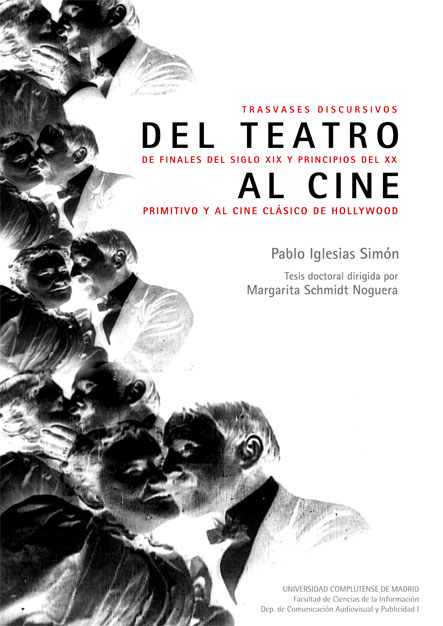
De las tablas al celuloide: trasvases discursivos del teatro al cine ... Escrito por Pablo Iglesias Simón

DE LAS TABLAS AL CELULOIDE es una reelaboración y síntesis del trabajo de investigación realizado para la confección de la tesis doctoral “Trasvases discursivos del teatro de finales del siglo XIX y principios del XX al Cine Primitivo y al Cine Clásico de Hollywood”. La tesis fue dirigida por Margarita Schmidt Noguera y defendida el día 12 de julio de 2005 en la Facultad de Ciencias de la Información de la Universidad Complutense de Madrid. El tribunal estuvo presidido por Emilio C. García Fernández y actuaron, en calidad de secretario, Julio Sánchez Andrada, y de vocales, Ángel Martínez Roger, Eduardo Pérez-Rasilla y Jesús Alcalde de Isla. La tesis obtuvo la calificación de Sobresaliente Cum Laude por unanimidad y a su autor le fue concedido el Premio Extraordinario de Doctorado. En el libro se han obviado muchas de las referencias, textuales, gráficas y cinematográficas, que sustentan algunos de los argumentos de la investigación. Por este motivo, se invita a aquellos que quieran profundizar en el tema a que consulten la tesis doctoral original que se encuentra catalogada con la signatura T28635 en la Unidad Bibliográfica y Documental de Tesis Doctorales de la Universidad Complutense de Madrid.


para leer la tesis, un poco